Capacity habit
Buildyour engine.
Build your engine in three easy sessions a week.
- 2 km 3× a week
- Moderate Starting level
- 15 min Total time
Not for me Find a better habit

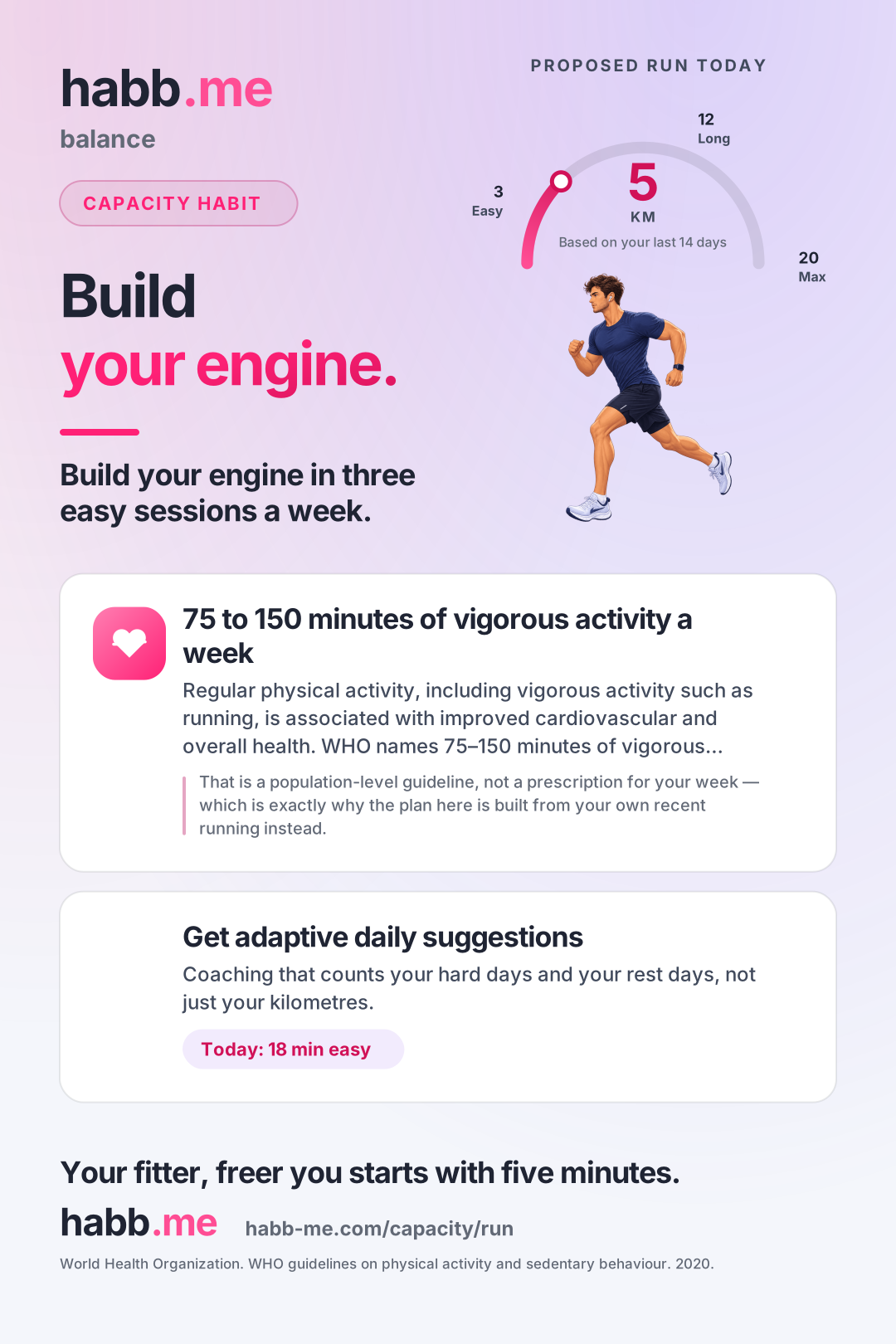
Proposed run today
Small daily habits. Big lifetime impact.
A small thing you can repeat beats a big thing you cannot. habb.me is built for the ten-year version of that, not for this week.
- Show up Consistency beats duration. The day you do it badly still counts.
- Trust the process Progress adds up quietly. You will notice it later than it happens.
- Built for you Your body, your pace. The plan is proposed from your own last two weeks.
Use the power of consistency to build an engine that lasts.
Cardiorespiratory fitness is the capacity everything else you do spends.
Success looks like one short easy run or run-walk session a few times per week, even when the pace stays conversational and the session stays modest.
-
Build your engine
Easy running three times a week is close to the smallest schedule that still builds an aerobic base.
-
Run-walk counts
Intervals of running and walking are a legitimate version of the session, not a lesser one.
-
Three sessions, any days
The week decides, not the calendar. A session missed on Tuesday is a session done on Thursday.
Bodies that keep moving tend to age better.
75 to 150 vigorous minutes a week: what the guidance actually asks for.
Regular physical activity, including vigorous activity such as running, is associated with improved cardiovascular and overall health. WHO names 75–150 minutes of vigorous aerobic activity per week as one route to substantial health benefits for adults.
That is a population-level guideline, not a prescription for your week — which is exactly why the plan here is built from your own recent running instead.
World Health Organization. WHO guidelines on physical activity and sedentary behaviour. 2020. Read the source
The habit
Two easy kilometres, three times a week.
Every session at your limit is how running stops. The plan is built to be repeatable next week.
Your routine
- 3 min Walk to warm up
- 10 min Easy running or run-walk
- 2 min Walk it off and log it
Total: 15 min
Today: 18 min easy — Two hard sessions behind you, so today is deliberately not one.
Your 4-pillar fitness system.
Running is your Capacity pillar. The other three are here when you want them.
- Strength Build strength.
- Capacity Grow capacity. This habit
- Mobility Move freely.
- Recovery Recover well.
Get adaptive daily suggestions
Coaching that counts your hard days and your rest days, not just your kilometres.
What 30 days adds up to.
- 13 days you show up
- 26 km in total
- Base getting stronger what habb.me would call it
Individual results vary. This is a small habit experiment, not a medical claim.
Members with current foot, ankle, knee, hip, or back pain, recent lower-body injury, symptoms made worse by impact, or clinician guidance against running should modify to walking or follow that guidance instead of forcing the habit.
Your fitter, freer you starts with five minutes.
Five easy minutes. Start where you are. Build from there.
Not for me Find a better habit
Running questions
How far should I run as a beginner?
Start with five minutes rather than a distance. habb.me then proposes each run from your own recent volume, pace and rest — including the days it suggests you do not run.
How often should I run each week?
Often enough to accumulate the volume, rarely enough to absorb it. Frequency is part of what the plan adapts, based on your hard sessions and your rest days.
Should I run or walk?
Running trains aerobic capacity; walking builds everyday activity and gives you outdoor time. They are separate habits here precisely because one is not a weaker version of the other.