Capacity habit
More sunlight. More nature.Better you.
Get outside with just 10 minutes a day.
- 2,000 steps Daily
- Beginner Starting level
- 10 min Total time
Not for me Find a better habit

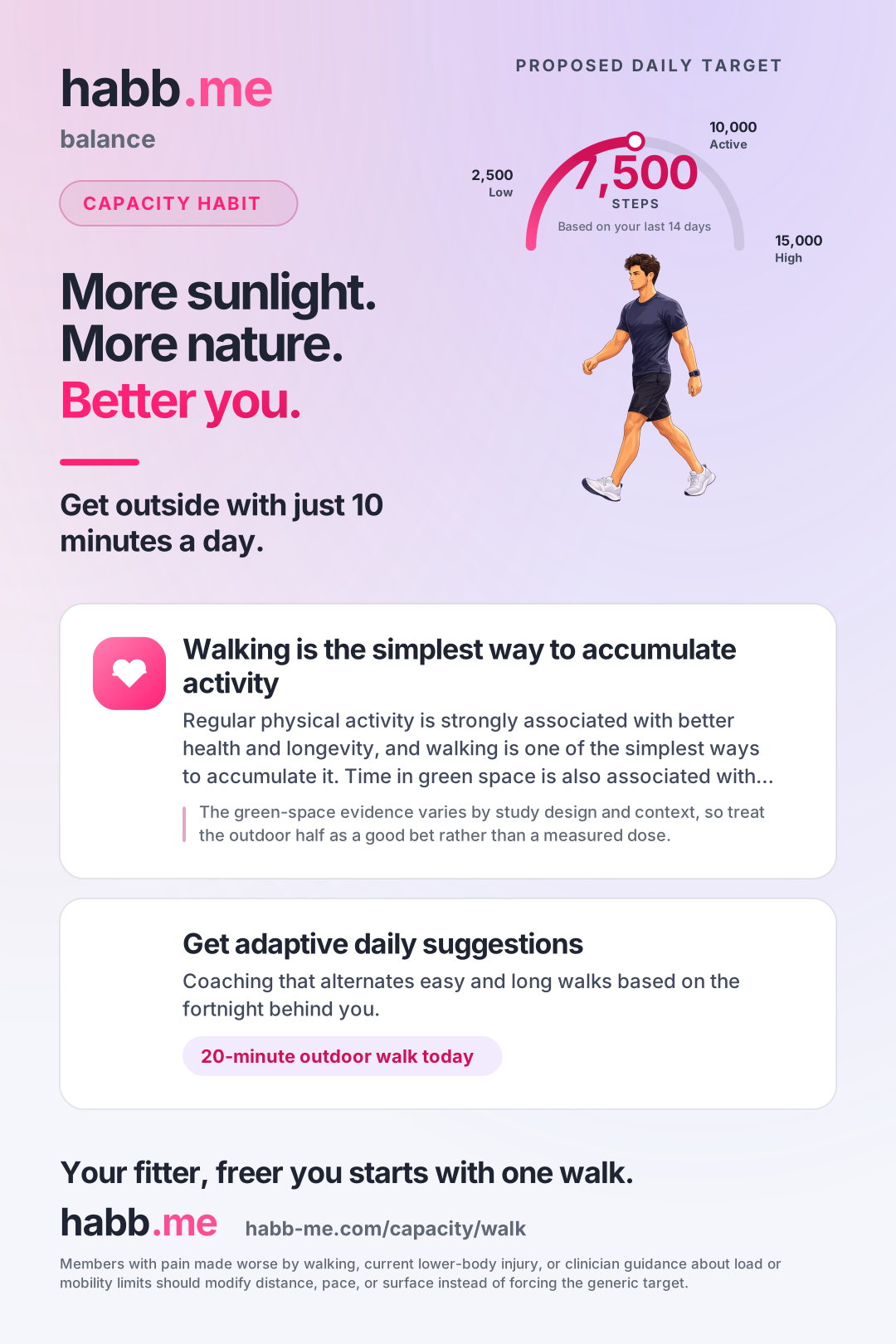
Proposed daily target
Small daily habits. Big lifetime impact.
A small thing you can repeat beats a big thing you cannot. habb.me is built for the ten-year version of that, not for this week.
- Show up Consistency beats duration. The day you do it badly still counts.
- Trust the process Progress adds up quietly. You will notice it later than it happens.
- Built for you Your body, your pace. The plan is proposed from your own last two weeks.
Use the power of consistency to build the capacity to keep going.
No kit, no session, no recovery cost. It fits in the day you already have.
Success looks like one deliberate walk that reaches your planned step target most days, even when the route stays short and the pace stays comfortable.
-
Movement that fits
Two thousand deliberate steps go into a route you already walk, so nothing new has to be scheduled.
-
Build the base
Easy walking is the aerobic work that does not cost you tomorrow, which is exactly why it can be daily.
-
Get outside
Daylight and a change of scene are the part of the walk that is not about the steps.
Bodies that keep moving tend to age better.
Daily walking: the simplest activity the evidence supports.
Regular physical activity is strongly associated with better health and longevity, and walking is one of the simplest ways to accumulate it. Time in green space is also associated with better mental wellbeing.
The green-space evidence varies by study design and context, so treat the outdoor half as a good bet rather than a measured dose.
The habit
Two thousand steps. About ten minutes.
This habit is accessible movement, a mental reset and outdoor time. Running is aerobic training. They are different habits with different jobs.
Your routine
- 1 min Shoes on, phone down
- 8 min Walk your usual route
- 1 min Log the steps
Total: 10 min
20-minute outdoor walk today — A recovery-friendly way to build your capacity.
Your 4-pillar fitness system.
Walking is your Capacity pillar. The other three are here when you want them.
- Strength Build strength.
- Capacity Grow capacity. This habit
- Mobility Move freely.
- Recovery Recover well.
Get adaptive daily suggestions
Coaching that alternates easy and long walks based on the fortnight behind you.
What 30 days adds up to.
- 30 days you show up
- 60,000 steps in total
- Base getting stronger what habb.me would call it
Individual results vary. This is a small habit experiment, not a medical claim.
Members with pain made worse by walking, current lower-body injury, or clinician guidance about load or mobility limits should modify distance, pace, or surface instead of forcing the generic target.
Your fitter, freer you starts with one walk.
Just 10 minutes a day. Start where you are. Build from there.
Not for me Find a better habit
Walking questions
How many steps should I walk a day?
There is no single right number. habb.me proposes a daily target from your own last two weeks — for many people that starts well below the familiar 10,000.
Does a walk count if it is indoors?
Yes. The habit is completed by the walk. Outdoor sessions are tracked separately because sunlight and green space are a bonus, not the requirement.
Is walking enough, or should I run?
Walking is not a lesser version of running. It builds everyday activity and gives you a mental reset; running trains aerobic capacity. Pick the one you will actually repeat — or keep both.