Recovery habit
Give your minda break.
Give your mind a break in just 2 minutes a day.
- 2 min Daily
- Beginner Starting level
- 2 min Total time
Not for me Find a better habit

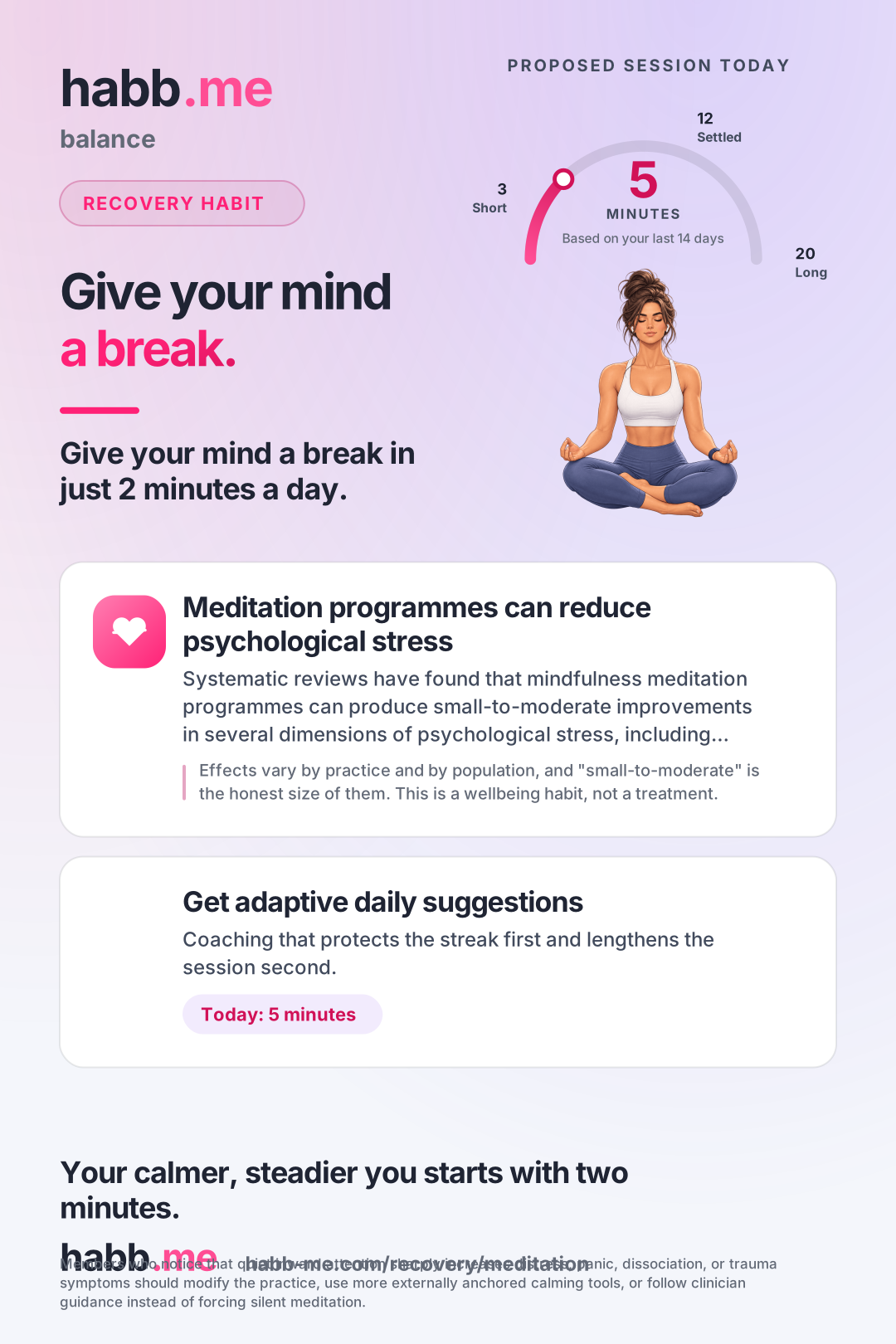
Proposed session today
Small daily habits. Big lifetime impact.
A small thing you can repeat beats a big thing you cannot. habb.me is built for the ten-year version of that, not for this week.
- Show up Consistency beats duration. The day you do it badly still counts.
- Trust the process Progress adds up quietly. You will notice it later than it happens.
- Built for you Your body, your pace. The plan is proposed from your own last two weeks.
Use the power of consistency to give your mind real recovery.
You schedule rest days for your legs. This is the same idea, applied upward.
Success looks like one short meditation most days, even when attention wanders and the session stays brief.
-
A gap before the reaction
Two minutes of sitting still is practice at noticing a state before acting on it.
-
Attention is trainable
Coming back to the breath after wandering is the repetition. The wandering is not the failure.
-
Two minutes always fits
Short enough that no day is too full for it, which is the only length that survives a hard week.
Bodies that recover well tend to age better.
Meditation programmes: small-to-moderate effects on psychological stress.
Systematic reviews have found that mindfulness meditation programmes can produce small-to-moderate improvements in several dimensions of psychological stress, including anxiety and depressive symptoms.
Effects vary by practice and by population, and "small-to-moderate" is the honest size of them. This is a wellbeing habit, not a treatment.
The habit
Two minutes of sitting still.
Two minutes every day beats twenty minutes on Sunday. The fundamental habit stays simple on purpose.
Your routine
- 30 sec Sit somewhere you will not be interrupted
- 2 min Breathe, and come back when you wander
- 30 sec Log it
Total: 2 min
Today: 5 minutes — You have sat down five days running, so the session grows rather than the streak.
Your 4-pillar fitness system.
Meditation is your Recovery pillar. The other three are here when you want them.
- Strength Build strength.
- Capacity Grow capacity.
- Mobility Move freely.
- Recovery Recover well. This habit
Get adaptive daily suggestions
Coaching that protects the streak first and lengthens the session second.
What 30 days adds up to.
- 30 days you show up
- an hour of quiet in total
- Starting to stick what habb.me would call it
Individual results vary. This is a small habit experiment, not a medical claim.
Members who notice that quiet inward attention sharply increases distress, panic, dissociation, or trauma symptoms should modify the practice, use more externally anchored calming tools, or follow clinician guidance instead of forcing silent meditation.
Your calmer, steadier you starts with two minutes.
Just 2 minutes a day. Start where you are. Build from there.
Not for me Find a better habit
Meditation questions
How long should I meditate as a beginner?
Two minutes. The progression runs 2, 3, 5, 10 and 15 minutes, and habb.me only proposes the next step once the current one is actually holding.
Which type of meditation should I do?
Breathing, body scan, open awareness, guided or silent — whichever you will repeat. The format is yours; the habit is sitting down.
What if my mind wanders?
That is the practice, not a failure of it. The habit is completed by doing the session, not by achieving a particular state during it.