Recovery habit
Wake upenergized.
Wake up better on one decision a night.
- 1 night Daily
- Beginner Starting level
- 5 min Total time
Not for me Find a better habit

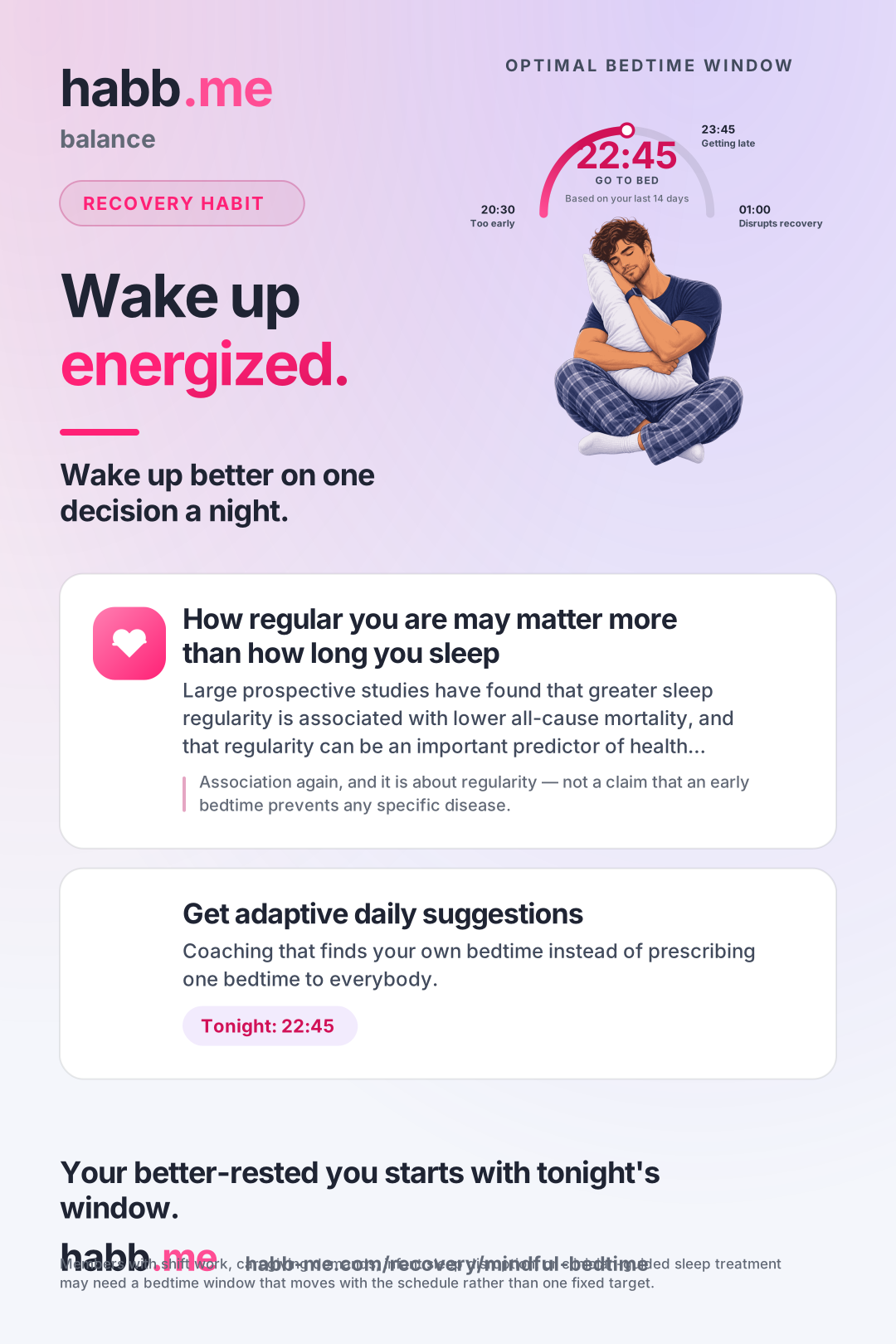
Optimal bedtime window
Small daily habits. Big lifetime impact.
A small thing you can repeat beats a big thing you cannot. habb.me is built for the ten-year version of that, not for this week.
- Show up Consistency beats duration. The day you do it badly still counts.
- Trust the process Progress adds up quietly. You will notice it later than it happens.
- Built for you Your body, your pace. The plan is proposed from your own last two weeks.
Use the power of consistency to make sleep repeatable.
One perfect night changes nothing. A repeatable bedtime changes the whole week.
Success looks like being in bed inside your chosen bedtime window most nights, with the target free to move toward the nights that actually work for you.
-
One decision, not eight hours
The habit is the time you go to bed. Most of what happens to the night follows from that one call.
-
Give recovery a schedule
A rhythm the body can predict is what lets the rest of the work you do actually land.
-
Mornings stop being a negotiation
Waking at a similar time is the half of this you notice, and it arrives free with the other half.
Bodies that recover well tend to age better.
Sleep regularity: measured as regularity, which is the part you can decide.
Large prospective studies have found that greater sleep regularity is associated with lower all-cause mortality, and that regularity can be an important predictor of health outcomes.
Association again, and it is about regularity — not a claim that an early bedtime prevents any specific disease.
The habit
One decision, every night.
Missing the window is data, not failure. The target is meant to move toward the nights that actually work for you.
Your routine
- 2 min Screens down
- 2 min Lights low
- 1 min In bed inside your window
Total: 5 min
Tonight: 22:45 — Window 22:30–23:00, drawn from the fortnight you actually slept well in.
Your 4-pillar fitness system.
A mindful bedtime is your Recovery pillar. The other three are here when you want them.
- Strength Build strength.
- Capacity Grow capacity.
- Mobility Move freely.
- Recovery Recover well. This habit
Get adaptive daily suggestions
Coaching that finds your own bedtime instead of prescribing one bedtime to everybody.
What 30 days adds up to.
- 30 days you show up
- 30 nights on one rhythm in total
- Rhythm holding what habb.me would call it
Individual results vary. This is a small habit experiment, not a medical claim.
Members with shift work, caregiving demands, infant sleep disruption, or clinician-guided sleep treatment may need a bedtime window that moves with the schedule rather than one fixed target.
Your better-rested you starts with tonight's window.
One decision a night. Start where you are. Build from there.
Not for me Find a better habit
Mindful Bedtime questions
What time should I go to bed?
The one you can hit most nights. habb.me learns when you tend to sleep well and recommends an individualised target rather than a single bedtime for everyone.
What if I miss the window?
Nothing breaks. The habit measures consistency over time, and the target adapts to the pattern it sees rather than to the night you had.
Is this a sleep tracker?
No. It tracks the decision you control — when you go to bed — and uses sleep duration only where it is available.