Recovery habit
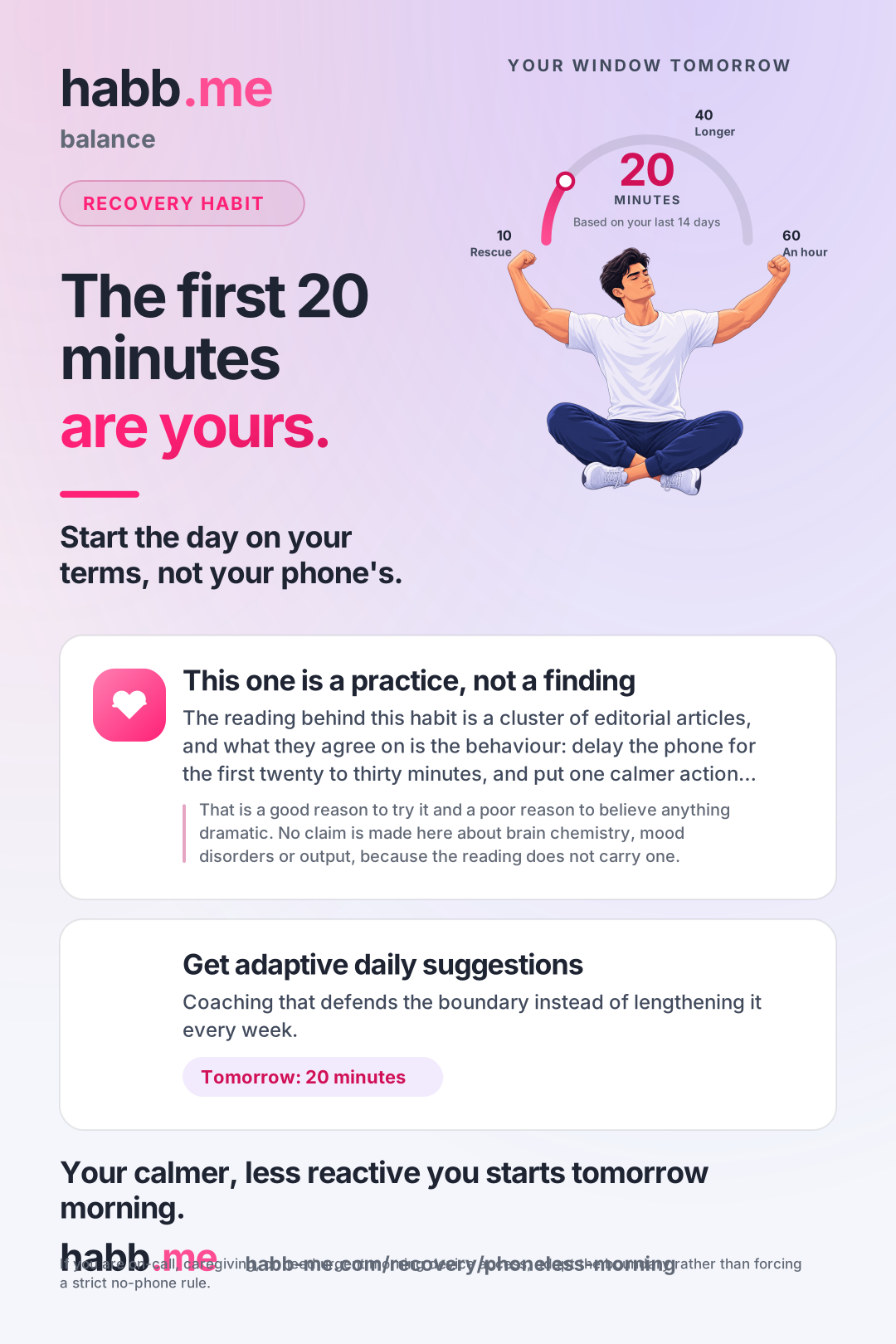
The first 20 minutesare yours.
Start the day on your terms, not your phone's.
- 20 min Daily
- Beginner Starting level
- 20 min Total time
Not for me Find a better habit

Your window tomorrow
Small daily habits. Big lifetime impact.
A small thing you can repeat beats a big thing you cannot. habb.me is built for the ten-year version of that, not for this week.
- Show up Consistency beats duration. The day you do it badly still counts.
- Trust the process Progress adds up quietly. You will notice it later than it happens.
- Built for you Your body, your pace. The plan is proposed from your own last two weeks.
Use the power of consistency to keep the first minutes yours.
Whatever arrives first sets the agenda for the morning. Usually it is not you.
Success looks like delaying phone input long enough for one calmer action to happen first, not maintaining a perfect screen-free morning.
-
The first input decides the day
Whatever you read first is what the morning ends up being about. Twenty minutes is enough to make that your own call.
-
Nothing to answer yet
An inbox opened at seven is a list of other people's requests, and every one of them will still be there at twenty past.
-
One calmer thing, first
The window is not empty. It holds one small action you chose the night before, which is the part that makes it hold.
A boundary you can keep beats a detox you cannot.
And this one is behaviour design rather than a research finding — said plainly.
The reading behind this habit is a cluster of editorial articles, and what they agree on is the behaviour: delay the phone for the first twenty to thirty minutes, and put one calmer action in the gap.
That is a good reason to try it and a poor reason to believe anything dramatic. No claim is made here about brain chemistry, mood disorders or output, because the reading does not carry one.
The habit
Twenty minutes before the phone.
Twenty minutes is the whole ask. A phone-free morning is a different habit, and a much harder one to keep.
Your routine
- 1 min Tonight: charge the phone out of arm's reach
- 20 min Wake up and leave it where it is
- 5 min Water, daylight, a stretch — whatever you picked
Total: 20 min
Tomorrow: 20 minutes — You have held the window six mornings running, so it stays where it is.
Your 4-pillar fitness system.
A phoneless morning is your Recovery pillar. The other three are here when you want them.
- Strength Build strength.
- Capacity Grow capacity.
- Mobility Move freely.
- Recovery Recover well. This habit
Get adaptive daily suggestions
Coaching that defends the boundary instead of lengthening it every week.
What 30 days adds up to.
- 30 days you show up
- 10 hours the phone did not get in total
- Boundary holding what habb.me would call it
Individual results vary. This is a small habit experiment, not a medical claim.
If you are on-call, caregiving, or need urgent morning device access, adapt the boundary rather than forcing a strict no-phone rule.
Your calmer, less reactive you starts tomorrow morning.
Twenty minutes. Start where you are. Build from there.
Not for me Find a better habit
Phoneless Morning questions
What if my phone is my alarm?
Then the alarm is the only thing it does. Turn it off and put it back down — or use a separate clock, if reaching for the screen keeps turning into scrolling.
What if I check it without thinking?
Put it down and protect the next ten minutes. A rescued morning counts: the habit reads the boundary you kept, not the one you broke.
What if I have to be reachable in the morning?
Then narrow the rule rather than dropping it — calls get through, feeds and email wait. If you are on call or caregiving, urgent access comes first and the boundary adapts around it.