Strength habit
Improve yourlongevity.
Get in shape with just 2 minutes a day.
- 1 push-up Daily
- Moderate Starting level
- 2 min Total time
Not for me Find a better habit

Proposed daily load
Small daily habits. Big lifetime impact.
A small thing you can repeat beats a big thing you cannot. habb.me is built for the ten-year version of that, not for this week.
- Show up Consistency beats duration. The day you do it badly still counts.
- Trust the process Progress adds up quietly. You will notice it later than it happens.
- Built for you Your body, your pace. The plan is proposed from your own last two weeks.
Use the power of consistency to build a stronger, fitter you.
Strength is not a season. The small set you repeat is the one still there in ten years.
Success looks like one controlled set of a valid push-up variation most days, even when the variation stays modified and the set stays small.
-
Press something, often
One controlled set keeps pressing strength in regular practice, with no equipment and no training block to schedule.
-
Prove it to yourself
A set you finish clean is a small win you can repeat, which is what makes the next one easy to start.
-
Small enough to keep
The goal is not to turn each day into a workout. It is to make the practice small enough to survive a bad week.
Stronger bodies tend to age better.
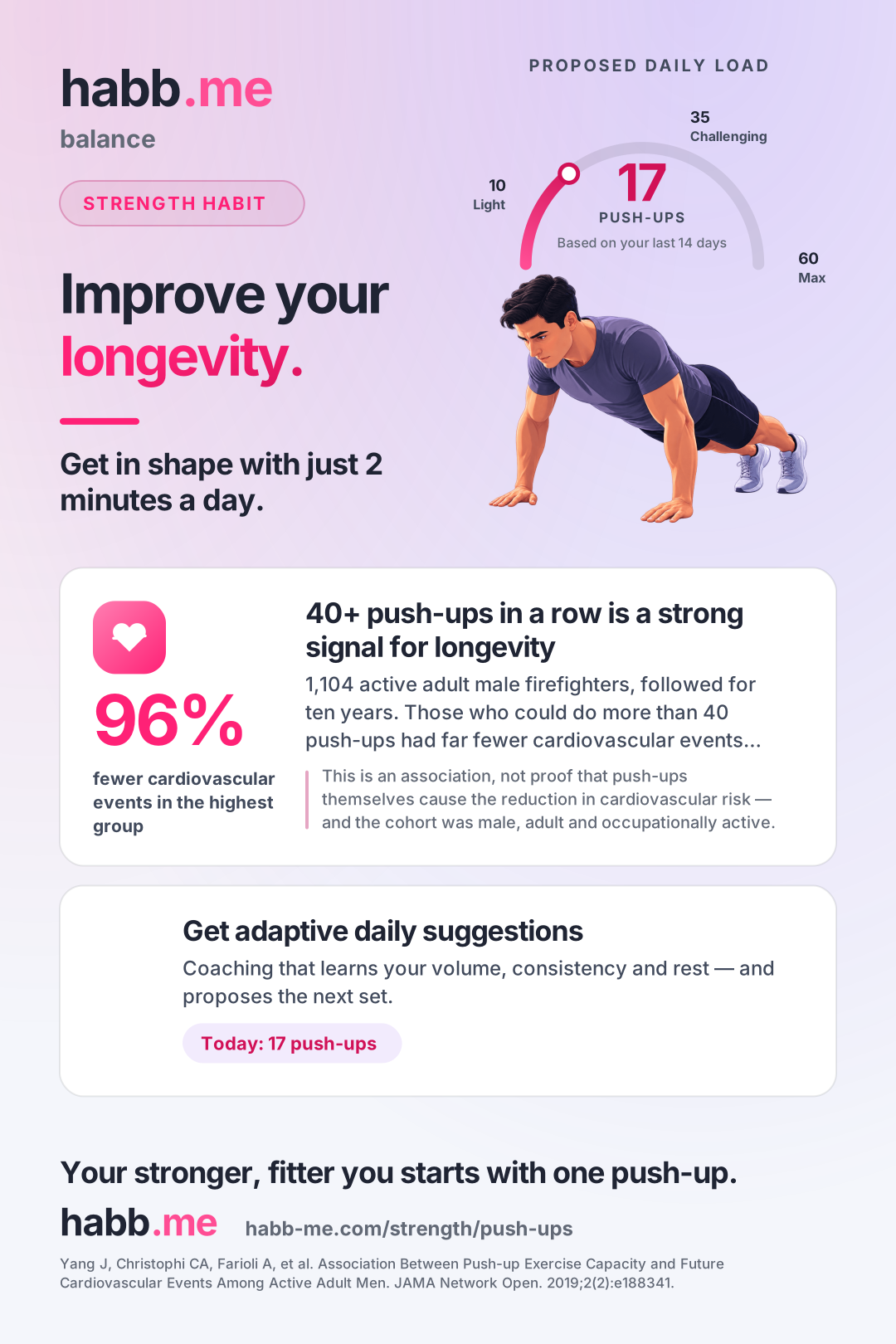
40+ push-ups in a row: a compelling cardiovascular association.
1,104 active adult male firefighters, followed for ten years. Those who could do more than 40 push-ups had far fewer cardiovascular events than those who could do fewer than 10.
This is an association, not proof that push-ups themselves cause the reduction in cardiovascular risk — and the cohort was male, adult and occupationally active.
Yang J, Christophi CA, Farioli A, et al. Association Between Push-up Exercise Capacity and Future Cardiovascular Events Among Active Adult Men. JAMA Network Open. 2019;2(2):e188341. Read the source
The habit
One controlled push-up. That is the whole ask.
A set you can repeat, not a daily test. Stop while the reps are still clean.
Your routine
- 30 sec Wrists and shoulders
- 60 sec One controlled set
- 30 sec Log it and get on with your day
Total: 2 min
Today: 17 push-ups — Your recent volume suggests this is a good step forward.
Your 4-pillar fitness system.
Push-ups are your Strength pillar. The other three are here when you want them.
- Strength Build strength. This habit
- Capacity Grow capacity.
- Mobility Move freely.
- Recovery Recover well.
Get adaptive daily suggestions
Coaching that learns your volume, consistency and rest — and proposes the next set.
What 30 days adds up to.
- 30 days you show up
- 30 controlled sets in total
- Strength practice sticking what habb.me would call it
Individual results vary. This is a small habit experiment, not a medical claim.
Members with current wrist, hand, elbow, shoulder, chest, or neck pain, recent upper-body injury or surgery, dizziness with floor transitions, or clinician guidance against loaded pressing should modify the movement or follow that guidance instead of forcing standard reps.
Your stronger, fitter you starts with one push-up.
Just 2 minutes a day. Start where you are. Build from there.
Not for me Find a better habit
Push-Ups questions
How many push-ups should I do a day?
Start with one. After that it depends on what you have been doing lately, which is why habb.me proposes a number from your last two weeks instead of a fixed set.
Is it safe to do push-ups every day?
For most people a small, controlled daily set is sustainable — the risk is in training to failure daily, not in the frequency. Modify or seek guidance if you have current upper-body pain or a recent injury.
Do knees-down or incline push-ups count?
Yes. Modified variants are established enough to be used as muscular-endurance assessments, so they are a legitimate version of the habit, not a lesser one.